

Ayurvedic Guide to Deep Sleep
-
By lavedaa
Ayurvedic Guide to Deep Sleep
Sleep is one of the three pillars of health in Ayurveda, and deep, restorative sleep is essential for healing, immunity, and mental balance. Yet in today’s fast-paced world sleep problems are rampant: the WHO calls sleep deprivation a global epidemic, with roughly 30–45% of people affected. Modern factors like late-night screen exposure, chronic stress, shift-work, caffeine and alcohol, and irregular schedules all fragment sleep. For example, blue light from devices suppresses melatonin and delays sleep onset. High stress and anxiety increase “inner wind” (Vata) or “inner heat” (Pitta), making the mind restless at night. Irregular work hours and inconsistent routines (e.g. shift work) scramble the body’s circadian rhythms. Poor sleep hygiene – heavy or spicy evening meals, late workouts, too much coffee, daytime napping, and noisy or bright bedrooms – further degrade sleep quality. All these modern lifestyle factors conspire to diminish sleep quality and quantity, leaving people tired and irritable even after “enough” hours in bed.
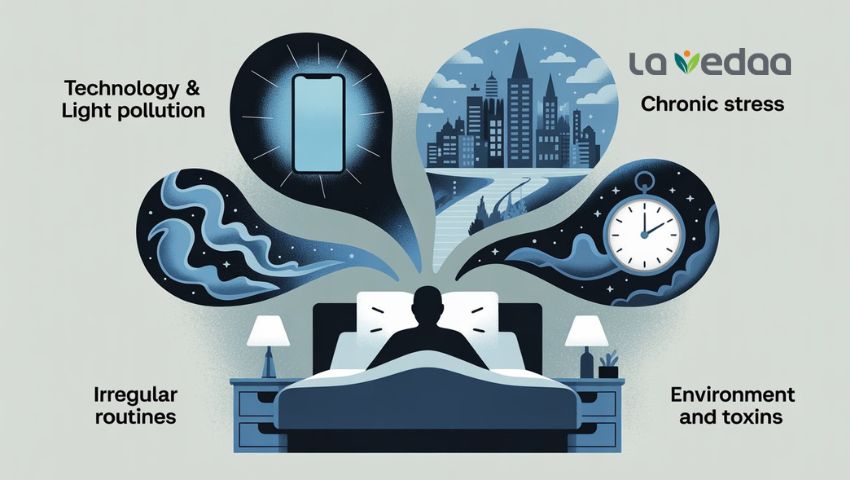
Modern Causes of Sleep Disturbance
- Technology & Light Pollution: Excessive screen time in the evening (phones, tablets, TVs) exposes us to blue light, which delays melatonin release and reduces deep sleep. Constant connectivity also feeds stress hormones and keeps the mind active.
- Chronic Stress and Busy Schedules: High mental or emotional stress (work pressure, family demands, financial worries) agitates the nervous system. In Ayurvedic terms, this aggravates Vata (wind) or Pitta (fire), causing overthinking or nighttime heat and restlessness.
- Irregular Routines: Shift work, travel across time zones, and late-night habits confuse the body’s internal clock. Irregular sleep–wake times prevent the normal cycle of cortisol and melatonin, making it hard to fall asleep or wake up refreshed.
- Poor Sleep Habits: Late heavy meals, caffeine or alcohol close to bedtime, daytime napping, and a noisy or cluttered bedroom all impair sleep. Ayurveda emphasizes that divaswapna (daytime napping) increases Kapha (earth–water) energy and can disrupt the natural night cycle. Likewise, meals that are hard to digest or too late overload the digestive fire (agni), leading to tossing and turning.
- Environment and Toxins: Exposure to noise, light pollution, electromagnetic fields, and chemicals (like pesticides or cleaning solvents) can stimulate the body and disturb sleep. Ayurveda teaches that accumulated toxins (ama) disrupt Ojas (vitality), making sleep fragmented and unrefreshing.
These factors, often compounded, explain why so many people lie awake at night. Even in healthy individuals, lack of sleep leads to daytime drowsiness, irritability, and impaired performance. Conventional medicine often resorts to sedatives or sleeping pills, but these only treat symptoms. The Ayurvedic approach looks deeper: it asks why sleep is disturbed and how to restore the body’s own sleep-regulating systems.
Ayurvedic Principles of Sleep
In Ayurveda, sleep (nidra) is as vital as food and breath. Deep sleep is the state where consciousness withdraws from the senses and the body self-repairs. It is closely tied to Ojas, the body’s subtle essence of vitality and immunity. Sage Charaka noted, “Dependent on sleep is happiness and misery, strength and weakness, intellect and non-intellect, life and death”. Simply put, without good sleep, nothing else functions well.
Ayurveda also links sleep with the balance of the three doshas (mind-body energies):
- Kapha (earth–water) is naturally heavy, cooling and stable. In a healthy balance, Kapha brings about deep, comfortable sleep. But if Kapha is too high (e.g. after heavy meals, oversleeping, or obesity), one may feel lethargic and still sleep poorly due to sluggish digestion. If Kapha is too low (as in vata or pitta body types), sleep can be light or interrupted.
- Pitta (fire–water) governs digestion and metabolism. Excess Pitta (from stress, spicy foods, overheating) can cause an overheated, racing mind at night, leading to early awakening, night sweats, or vivid dreams. Ayurvedic experts note that aggravated Pitta often “interferes with our ability to fall asleep”.
- Vata (air–ether) rules movement and the nervous system. Vata excess manifests as anxiety, overthinking, and restlessness, which directly prevent falling asleep or cause waking up during the night. In Charaka’s words, fear, anxiety, anger, and overwork – all Vata aggravators – are classic causes of insomnia.
When any dosha is significantly out of balance, sleep suffers. For example, an overactive mind (Vata) churns through thoughts and memories instead of calming down, while excess Pitta literally “burns away” the body’s heating process at night. Ayurveda therefore aims to balance doshas (especially pacify vata and pitta, and stabilize kapha) to restore natural sleep.
The Role of Ojas
Ojas is a unique Ayurvedic concept often translated as vitality or “life-sap.” It is the finest product of digestion and metabolism, stored mainly in the heart. Ojas gives vigor, immunity, and stability to the mind. Good sleep builds Ojas, and strong Ojas in turn makes deep sleep easy. As one Ayurvedic source explains, sleep “supports the generation of ojas… which governs growth, healing, and enhances the immune system”. In modern terms, this echoes how deep sleep boosts growth hormone release, immune cell activity, and tissue repair. When sleep is poor, Ojas is depleted – we feel tired, anxious, and prone to illness. Thus, one way to view sleep therapeutically is that it replenishes the body’s vital reserves.
In summary, Ayurveda sees good sleep as both a sign and a source of health. By addressing imbalances in mind, digestion, and lifestyle, one can naturally restore sleep without reliance on drugs. The following sections detail how to do that, and how specific Ayurvedic herbs can help.
Lifestyle and Dietary Recommendations

Ayurveda emphasizes a holistic dinacharya (daily routine) to support sleep:
- Consistent schedule: Go to bed and wake up at the same times every day, ideally aligning with natural rhythms (sleep by 10–11 pm, wake at sunrise). This regularity “helps the body’s internal clock” and improves sleep quality.
- Evening wind-down: Establish calming pre-bedtime rituals. One may read, meditate, or listen to soothing music 30–60 minutes before sleep. Avoid stimulating activities (TV, smartphones, intense exercise) in the hour before bed. Practice gentle yoga or stretching in the evening to release physical tension; a small study found that morning yoga with pranayama (breathing exercises) improved sleep quality.
- Abhyanga (oil massage): A warm self-massage with sesame or coconut oil before bathing or bedtime is highly recommended to pacify Vata. Abhyanga “melts away tension and stress”. In fact, clinical trials show regular self-oil massage significantly decreases stress and improves sleep quality. Even simply massaging warm oil on the soles of the feet before bed is said to ground energy and promote relaxation.
- Meal timing and quality: Eat a light, early dinner – at least 2–3 hours before bedtime – to allow digestion to complete. Favor warm, cooked, easily digestible foods such as rice porridge (kitchari), soups or steamed vegetables in the evening. Ayurveda teaches that a “light, nourishing diet… regulates energy and encourages peaceful sleep”. Add gentle spices like ginger, fennel, or cinnamon to support digestion. Avoid heavy, cold/raw, or hard-to-digest foods (salads, ice cream) late at night, as they can keep the digestive fire (agni) active when it should be slowing down. Likewise, skip caffeine, sugar, nicotine, and alcohol in the evening. If mild hunger strikes before bed, a small warm snack (e.g. milk with ashwagandha or a few soaked almonds) can soothe Vata.
- Warm drinks: A cup of warm milk (cow, goat, or nut milk) with a pinch of turmeric or with ½ tsp ashwagandha powder can have a calming effect. Traditional Ayurvedic texts even suggest a teaspoon of ghee in warm milk as a sleep tonic. Herbal teas made from ginger, fennel, or cardamom (in moderation) may aid digestion without overstimulating. (Note: We avoid chamomile or lavender specifically here, as they are not part of the La-Vedaa formula.)
- Bedroom environment: Keep the room cool, dark, and quiet. Proper ventilation and comfortable bedding are important. According to Ayurveda, excess light or noise aggravates Vata and Pitta, disturbing the mind. Aromatic herbs (like a few drops of lavender or sandalwood oil in a diffuser) can also help cue the body for rest, although these are outside our focus.
- Avoid daytime naps: Ayurvedic tradition cautions against long siestas (divaswapna) for most people, as napping tends to increase Kapha and can interfere with nighttime sleep. If you must nap (for example, to recover from poor sleep or if you are elderly and weak), keep it short (20–30 minutes) and not after 3 pm.
By adhering to these guidelines, one calms the nervous system and primes the body for deep sleep. In effect, Ayurveda treats insomnia like any chronic ailment: first detoxify and balance the system, then nourish it. Practices like nasya (nasal oil drops), warm baths, and gentle yoga can all be part of a sleep-friendly routine.
Ayurvedic Sleep Treatments: Ayurveda treats insomnia by balancing the individual’s doshas and improving overall vitality (Ojas). Rather than a “one-size-fits-all” pill, Ayurveda prescribes personalized lifestyle and dietary changes plus herbal tonics tailored to the person’s mind-body type. The advantage of this method is its holistic nature: it calms the mind (especially Vata and Pitta) through nutrition, promotes proper digestion, and uses natural adaptogenic herbs that gently restore sleep rhythms. For example, herbs like ashwagandha and brahmi (found in the La-Vedaa formula) are scientifically shown to lower stress and improve sleep quality. By addressing root causes (such as anxiety, poor digestion, or toxin buildup), Ayurveda often leads to more sustainable improvement. There are typically few side effects from these herbs at proper doses. The trade-off is that Ayurvedic methods usually take longer to work, require the person’s active participation (diet changes, routine discipline, regular herbal intake), and may need guidance from an experienced practitioner. In summary, allopathic treatments provide fast symptomatic relief (at the risk of side effects and rebound insomnia), while Ayurvedic care works slower but tends to strengthen the body’s own sleep mechanisms without heavy pharmaceuticals.
Ayurvedic Herbal Allies for Deep Sleep
Ayurveda employs specific calming and restorative herbs to promote deep sleep and nervous system balance. The La-Vedaa Deep Sleep Capsule is formulated with eight key herbs, each chosen for its traditional sedative, anxiolytic, or rejuvenating properties. These herbs have a long history of use in Ayurveda and some scientific support for sleep benefits:
- Tagara (Valeriana wallichii): Sometimes called Indian valerian, tagara is a potent sedative and nervine tonic in Ayurveda. It’s used for anxiety, restlessness, and insomnia. In one clinical trial on insomnia patients, Tagara powder (4 g thrice daily) significantly improved sleep onset and duration – with a 76% boost in sleep initiation and 55% longer sleep, along with markedly fewer awakenings. Tagara’s tranquilizing effect helps calm Vata and Pitta, making it easier to drift into deep sleep.
- Jatamansi (Nardostachys jatamansi): A cousin of Valerian, Jatamansi has similar calming effects on the mind and is also cardioprotective. In the same study as Tagara, Jatamansi powder also improved insomnia (sleep initiation improved by ~61%, duration by ~48%). Ayurveda especially values Jatamansi for soothing the nerves and reducing stress-induced sleep disturbances. While Tagara and Jatamansi both act as natural tranquilizers, the study noted Tagara’s effects were slightly stronger. Together, they form the sedative core of the formula.
- Ashwagandha (Withania somnifera): This famous adaptogenic herb modulates the stress response and has a mild sedative effect. Modern research confirms its sleep-promoting properties: in a randomized trial of older adults, 600 mg/day of ashwagandha root extract significantly improved self-reported sleep quality compared to placebo (P<0.0001). Participants felt more rested and alert on waking. In Ayurvedic terms, ashwagandha builds Ojas and calms aggravated Vata, making it easier to let go of anxiety at night. It also has antioxidant and anti-inflammatory effects that support brain health.
- Shankhpushpi (Convolvulus pluricaulis): A classic brain tonic (medhya rasayana) and nervous-system relaxant in Ayurveda. Shankhpushpi is traditionally used for insomnia, anxiety, and nervous exhaustion. Recent phytochemical studies note that Shankhpushpi has sedative and neuroprotective activities. It “reduces spontaneous motor activity” and gently lowers blood pressure, calming mental agitation. Ayurveda calls it superior among cognitive tonics for relieving stress and inducing restful sleep. (In formulas, it often appears as a powder or oil infusion.)
- Brahmi (Bacopa monnieri): Another cornerstone herb for the mind. Brahmi is known to enhance memory and soothe anxiety. Ayurvedic texts list “insomnia” and nervousness among Brahmi’s main indications. Modern studies have shown Brahmi’s anxiolytic effects (it lowers cortisol) and cognitive support. Though Brahmi is mildly stimulating to the brain, its overall effect is balancing: it stabilizes erratic Vata and Pitta energies, improving mental clarity during the day so that the mind can relax at night. Its antioxidant compounds also protect neural circuits involved in sleep regulation.
- Vacha (Acorus calamus): Also known as sweet flag, Vacha’s rhizomes are aromatic and warming. In Ayurveda it is used to soothe Vata and calm the nerves. Modern herbal sources note Vacha’s antidepressant and anxiolytic properties, and mention its use for insomnia. By quieting cerebral agitation and reducing stress-related chemicals, Vacha helps the mind settle. Its slightly stimulating quality also clears the head, ensuring that “cotton-wool” brain fog does not interrupt sleep.
Each of these herbs has been described in Ayurvedic classics as beneficial for the mind and nerves, and together they form a comprehensive sleep tonic. Importantly, their actions are synergistic: sedative herbs (Tagara, Jatamansi) help fall asleep, adaptogens (Ashwagandha) calm daytime stress and hormonal imbalances, and nootropics (Brahmi, Vacha) nourish the brain so that sleep can rejuvenate it fully.
Dietary and Daily Habits to Enhance Sleep
In addition to herbs, Ayurveda prescribes broad daily practices for sleep:
- Food for sleep: A well-digested dinner is crucial. Ayurveda recommends foods that pacify Vata and Pitta for the evening meal: warm soups, kichari (mung bean and rice porridge), stewed vegetables, and spices like cumin, fennel or coriander. Dairy products (milk, ghee, butter) used moderately are considered nourishing and sleep-promoting in Ayurveda. Sweet, cooling foods like dates and raisins are also favored at night (in moderation) because they are easy to digest and ground Vata. Overall, an Ayurvedic dinner should be lighter than lunch, cooked with ghee and mild spices to ensure it is calming.
- Avoid stimulants: Completely eliminate caffeine (coffee, black tea, cola), excessive sugar, and nicotine, as they aggravate Vata/Pitta. Spicy and very sour foods should be avoided in the evening, as they heat the body. Instead, include small amounts of sweet and bitter tastes to balance the doshas. Turmeric and ginger tea can help digestion after dinner without overstimulation.
- Moderate exercise: Engage in daily exercise or yoga, but not within 3 hours of bedtime. Early morning or afternoon workouts are best to burn off excess Kapha. Gentle evening routines (walking, restorative yoga) can be fine. Regular movement regulates circadian rhythms and reduces excess stress hormones, aiding sleep over time.
- Sunlight exposure: Natural bright light exposure in the morning (even a short walk outside) helps synchronize the body’s clock. Ayurvedic texts consider ravi prakriti (sun energy) important for health; lack of natural light can lead to sluggishness and poor sleep.
- Stress reduction: Practices like meditation, pranayama (breathwork), and calming herbal teas can lower the chronic stress that fuels insomnia. As one Ayurvedic practitioner notes, chronic insomnia is often just an expression of long-term vata or pitta imbalance. Techniques such as alternate-nostril breathing or mantra meditation can help pacify an overactive mind before bed. Even listening to relaxing music or chanting a soothing mantra (as simple as “Om Shanti”) can signal the mind to relax.
By following these lifestyle and dietary guidelines consistently, one addresses the root contributors to insomnia. Often patients report that within weeks of adopting an Ayurvedic routine, their sleep naturally improves: they fall asleep faster, stay asleep longer, and feel more rested. This internal support means herbal remedies can work more effectively and safely.

Ayurvedic vs. Allopathic Sleep Care: A Comparison
| Aspect | Conventional (Allopathic) | Ayurvedic |
| Approach | Targets symptoms: uses sedatives (zolpidem, melatonin, etc.) or CBT for insomnia. Effective for short-term relief. | Treats root causes: balances doshas through diet/lifestyle and uses herbs that strengthen the body’s own sleep processes. |
| Timeframe | Often fast-acting. Pills can induce sleep in minutes. | Gradual: herbs and lifestyle changes take days–weeks for full effect. Focus on long-term balance. |
| Personalization | Standard protocols (e.g. doseage by weight/age). | Highly individualized (dosha type, constitution, cause of insomnia all considered). |
| Side Effects | Sedatives can cause tolerance, daytime drowsiness, rebound insomnia, dependency. Long-term use linked to higher mortality. | Herbal and dietary approaches generally have fewer side effects when used correctly. Adaptogenic herbs normalize function rather than overwhelm the system. |
| Holistic benefits | Primarily improve sleep duration/latency. May not improve mood or overall health. | In addition to better sleep, promotes digestion, immunity, mental clarity, and emotional balance, since Ojas is rebuilt. |
| Drawbacks | Quick fix but not curative of stress or lifestyle issues. May require ongoing use or therapy. | Requires patient commitment: daily routines, dietary changes, and possibly practitioner guidance. Slower onset. |
| Notable notes | Cognitive Behavioral Therapy (CBT-I) has strong evidence for chronic insomnia. | Emphasizes prevention: Ayurvedic practitioners say “insomnia” (Anidra) often reflects long-standing Vata imbalance, so treatment restores overall rhythm. |
In practice, many people may benefit from integrating both systems: for example, using short-term CBT or low-dose melatonin under guidance, and adopting Ayurvedic sleep hygiene and herbs for lasting improvement. The key is recognizing that Ayurveda views sleep as a sign of systemic health: when the body and mind are balanced, sleep naturally occurs. As Charaka reminds us, sleep is intimately connected with every aspect of life and health.
Supporting Sleep Naturally
Recent studies support many Ayurvedic strategies. For instance, regular yoga and morning breathing exercises were found to improve sleep scores in older adults. Similarly, ashwagandha and other herbs show measurable benefit: one trial showed that elderly subjects taking ashwagandha extract had significantly better sleep quality and mental alertness on waking than those on placebo. Another analysis noted that Brahmi reliably reduces anxiety, a common insomnia trigger. These findings echo thousands of years of Ayurvedic clinical experience.
In summary, the Ayurvedic path to deep sleep involves rebalancing the body’s natural rhythms through diet, routine, and safe herbs. It may take a few weeks to normalize sleep patterns, but the improvements are sustainable and free from dependency. By calming Vata, cooling excess Pitta, and gently relaxing the nervous system, one can restore the natural cycle of deep, healing sleep.
La-Vedaa Deep Sleep Capsule: Herbal Composition and Benefits
The La-Vedaa Deep Sleep Capsule is an Ayurvedic herbal blend specifically designed to promote restful sleep and nourish the nervous system. Each capsule combines the eight herbs discussed above, leveraging their synergistic effects:
- Tagara & Jatamansi: Provide natural sedation and reduce nighttime awakenings.
- Ashwagandha: Act as adaptogens to lower stress hormones, improve resilience, and balance Vata/Pitta. They support healthy digestion and immunity, indirectly enhancing sleep quality.
- Brahmi: Calm and nourish the brain and cognitive functions, helping clear the mind of anxieties or ruminations before bed. They promote mental tranquility and restorative sleep.
- Vacha: Grounds Vata energy and soothes neural firing, ensuring a smoother transition to sleep.
Together, these herbs in La-Vedaa Deep Sleep Capsule work on multiple levels: they address the root imbalances (per Ayurveda) that cause insomnia while gently guiding the mind–body toward relaxation. Regular use, along with the dietary and lifestyle measures outlined above, supports a deeper sleep cycle, higher daytime energy, and improved Ojas (vitality). Unlike pharmaceutical sleeping pills, this all-natural formulation has no drowsy hangover effect or risk of addiction. By drawing on centuries of Ayurvedic wisdom and modern research, the La-Vedaa capsule offers a balanced, holistic aid for anyone seeking to reclaim restorative sleep and holistic well-being.
Sources: Ayurvedic and modern medical literature (citations in text) pacificcollege.edupubmed.ncbi.nlm.nih.govpubmed.ncbi.nlm.nih.govncbi.nlm.nih.govbanyanbotanicals.comwisdomlib.orghealth.clevelandclinic.org underlie the information above. Each herb’s role is based on traditional texts and supporting studies.